LLM API integration
You have a product and want AI inside it. The hard part is not the API call — it is everything around it: streaming, structured output, failures, rate limits, cost control and monitoring.
What this involves
A demo integration is fifteen lines of code. A production integration handles the model being slow, the provider having an outage, a response arriving malformed, a user pasting fifty thousand words, and a bug that would otherwise put a five-figure bill on your card overnight.
We build integrations behind an interface of your own, so swapping provider or model is a config change rather than a rewrite. Given how fast pricing and quality move, that abstraction usually pays for itself within months.
- Streaming responses with correct cancellation
- Structured output validated against a schema
- Retry, timeout and provider fallback logic
- Prompt and response caching where it saves real money
- Per-user and per-tenant rate limiting and spend caps
- Token and cost telemetry per feature, in your dashboards
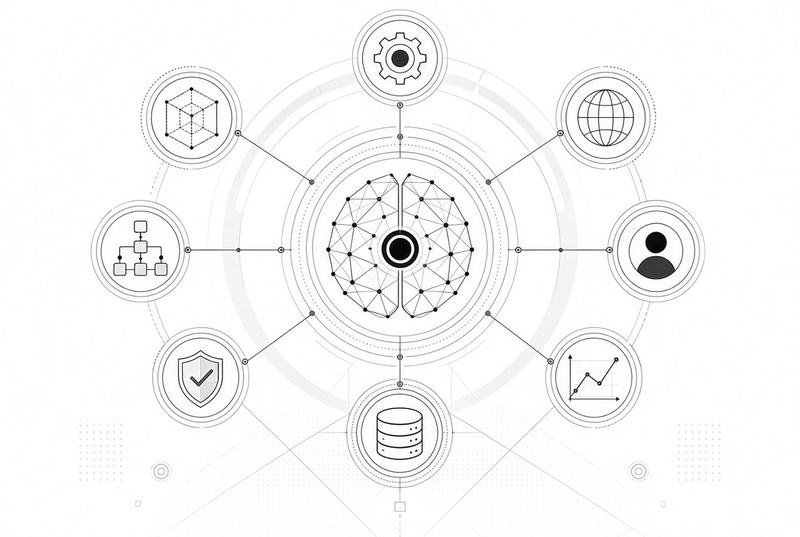
Cost control is a feature
Most teams discover their AI unit economics after the first big bill. We instrument spend per feature, per customer and per request from day one, add hard ceilings, and identify where a cheaper or smaller model produces identical results. Cutting spend by half without a quality drop is common on integrations built in a hurry.
Structured output that holds up
When AI output feeds another system, free text is a liability. We use schema-constrained generation with validation and repair, so downstream code receives data in a known shape or a clean error — never a half-parsed string that corrupts a database row.
Security at the boundary
User input reaching a model is untrusted input. We apply input limits, injection-resistant prompt structure, output escaping before rendering, and strict rules about what the model is allowed to trigger. Anything the model can call, an attacker can try to make it call.
Frequently asked questions
Which provider should we use?
Can you add AI to our existing codebase?
Yes — most of this work is exactly that. We work in your stack and your conventions, submit pull requests your team reviews, and leave the code looking like it belongs there.
How do you handle provider outages?
Timeouts, retries with backoff, and automatic fallback to a secondary provider for critical paths, plus a degraded mode that tells users honestly when AI features are unavailable rather than hanging.
Do you handle data privacy requirements?
Yes. That includes choosing providers with the right data handling terms, regional endpoints, zero retention configurations where available, and redaction before data leaves your systems.
Tell us what you are building.
Send a short description of the problem and we will reply within one business day with an honest view of scope, cost and whether we are the right person for it.
Or email directly: contact@hire-ai-dev.com